
Roll-off dumpster rental can simplify everything from a garage cleanout to a major renovation, but choosing a container involves more than deciding how much junk is sitting in the driveway. Size, debris weight, placement, rental length, and disposal restrictions all affect how smoothly the process works. Durham homeowners, contractors, landlords, and property managers can avoid many common problems by answering a few practical questions before delivery. Here is a closer look at what matters when planning temporary waste removal.
What Size Dumpster Is Right for a Durham Project?
The best dumpster size depends on the debris itself, not simply whether the project is labeled small, medium, or large. A single-room renovation with tile and dense demolition material can create different disposal demands than a large household cleanout filled mainly with furniture and boxes.
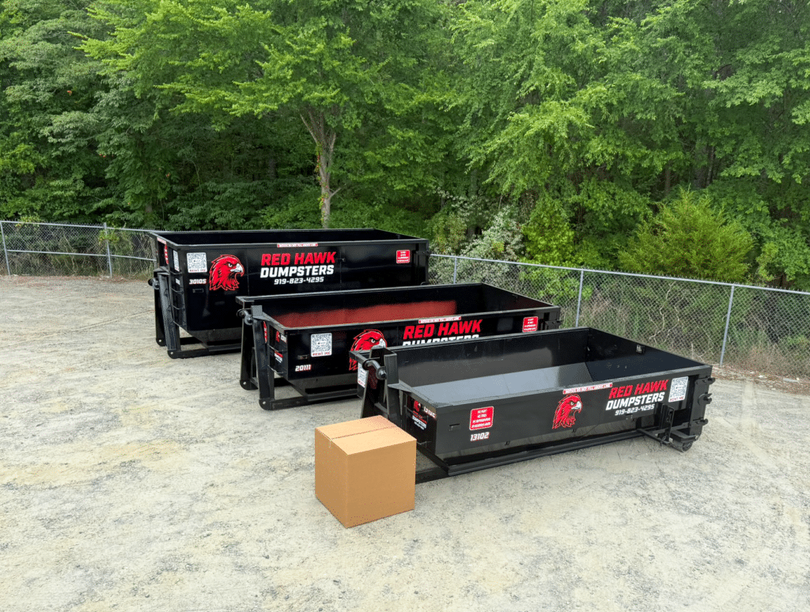
The company currently offers 10-, 15-, 20-, and 30-yard standard roll-off containers. A 10-yard dumpster is positioned for smaller interior jobs such as bathroom demolition, limited flooring removal, and one- or two-room cleanouts. The 15-yard option adds capacity for projects such as garage or attic cleanouts and multi-room flooring work.
A 20-yard container is better suited to larger interior renovations, basement cleanouts, kitchen projects, and certain deck or fence removals. A 30-yard dumpster provides substantially more volume for whole-house renovations, major demolition, commercial cleanouts, and other projects expected to create bulky debris.
Customers comparing options from Red Hawk should pay attention to weight as well as physical volume. The standard 10- and 15-yard containers list 2,000 pounds of included weight, while the 20-yard includes 3,000 pounds and the 30-yard includes 4,000 pounds. A container may therefore have visible space remaining while the debris inside is already relatively heavy.
Specialty materials require another level of planning. The company also lists separate containers for roofing shingles and clean concrete. Those options reflect an important waste-management principle: dense debris should not automatically be treated the same way as ordinary household junk.
When estimating size, make a rough inventory before ordering. Think in terms of cabinets, drywall, lumber, flooring, furniture, shingles, masonry, and other major materials. This produces a much more useful estimate than simply saying, “I’m remodeling my house.”
How Long Should You Rent a Dumpster?
Rental length should follow the work schedule rather than the amount of time a customer thinks a dumpster “normally” stays at a property. Red Hawk lists one-, three-, and seven-day rental choices for its standard roll-off containers, with extension options available when projects run longer.
A one-day rental can make sense when debris has already been staged, and the primary task is loading. Imagine a garage cleanout where everything has been sorted into keep, donate, and discard piles before the container arrives. In that situation, the dumpster does not need to sit unused while decisions are being made.
Renovations often benefit from more breathing room. Demolition may take several days, especially when contractors are working around other phases of the project. Flooring removal, kitchen demolition, bathroom renovation, and property cleanouts can also generate debris gradually rather than all at once.
Avoid scheduling pickup too tightly against the expected completion date. Construction schedules change. A delayed subcontractor, unexpected material behind a wall, or an extra day of demolition can quickly make an aggressive pickup date inconvenient.
At the same time, keeping a container significantly longer than necessary can tie up driveway or jobsite space. The more practical approach is to identify when debris generation will begin, when it should peak, and when the area needs to be cleared for the next stage of work.
Where Can a Dumpster Be Placed in Durham?
Placement deserves attention before the delivery truck arrives. A roll-off dumpster needs a firm, accessible location, and the delivery vehicle needs enough room to maneuver into position.
Private driveways and suitable parking areas are common choices. Before delivery, remove vehicles and check for low tree limbs, overhead wires, narrow gates, landscaping, temporary equipment, or other obstacles that could interfere with access. Think vertically as well as horizontally; an open patch of pavement is not necessarily accessible if branches or utilities are directly above it.
Customers arranging a Durham dumpster rental should also consider whether the container will remain entirely on private property. Red Hawk’s Durham guidance states that a dumpster on private residential property for 30 days or less generally does not require a city permit, while placement extending into a public street or right-of-way requires additional permitting. Longer residential placements can also involve separate requirements.
Placement affects the people doing the work, too. A dumpster positioned close to the demolition area can reduce carrying distance, but convenience should not come at the expense of access. Avoid blocking garage doors that still need to open, primary entrances, material-delivery routes, or spaces needed by other contractors.
For commercial renovations, the same principle applies on a larger scale. Customer parking, loading zones, service entrances, emergency access, and employee traffic may all need to remain usable while the container is on site.
What Materials Can Go in the Dumpster?
Many common renovation and cleanout materials can be placed in a roll-off dumpster. Red Hawk lists household furniture, construction debris, drywall, roofing shingles, lumber, flooring, tile, carpet, yard waste, general clutter, wood, fencing, decking, and other renovation materials among commonly accepted categories.
That does not mean a dumpster is an anything-goes container.
Hazardous waste, asbestos-containing materials, medical or biohazardous waste, propane tanks, automotive batteries, flammable or explosive materials, liquids, certain refrigerant-containing appliances, and radioactive materials are listed as prohibited. Tires also require confirmation rather than being treated as ordinary debris.
This is one of the easiest areas for customers to get into trouble because questionable material may not look especially unusual. A half-used container of paint, an old propane cylinder, or an appliance can easily end up mixed into a larger cleanout unless workers know what should be separated.
Create a small “check first” area during the project. Any item containing liquids, chemicals, pressurized gas, batteries, refrigerants, or potentially hazardous components can be placed there until its disposal requirements are confirmed. That takes almost no extra time and is much easier than trying to retrieve an item from underneath several feet of debris.
Concrete and roofing shingles deserve special attention because of their density. Even when such materials are accepted in certain circumstances, they can consume weight capacity quickly. Customers handling substantial amounts of one heavy material should consider whether a specialty container is more appropriate than mixing everything into a general-purpose roll-off.
How Can You Load a Dumpster More Efficiently?
A dumpster can have plenty of rated capacity and still fill prematurely if debris is loaded carelessly. Awkward furniture, cabinets, boxes, and long pieces of material can create empty pockets that become impossible to use later.
Start with bulky items that can be safely broken down. Flatten cardboard. Disassemble appropriate shelving or cabinetry. Position long pieces of lumber or trim so they follow the container rather than spanning it at strange angles. Smaller debris can then fill some of the spaces between larger materials.
Heavy items should be distributed rather than piled entirely at one end. This is particularly relevant with flooring, tile, shingles, and other dense construction waste.
Keep debris below the top of the container. A roll-off dumpster is not designed to travel with furniture, lumber, or bags sticking above its walls. Overfilling can interfere with safe transportation and may require material to be removed or rearranged before the dumpster can be hauled away.
Another useful habit is to load throughout the project rather than allowing debris to spread across the property first. When demolition waste goes directly from the work area to the container, crews handle it fewer times, and the site stays easier to navigate.
There is one exception: do not sacrifice sorting for speed. Restricted or questionable materials should remain outside the dumpster until they are confirmed as acceptable.
Good Dumpster Rental Begins With a Few Smart Decisions
Dumpster rental is easiest when waste removal is planned alongside the rest of the project. Choosing a container based on actual debris, allowing enough rental time, preparing an accessible placement area, understanding prohibited materials, and loading efficiently all reduce avoidable complications.
Durham projects range from small residential cleanouts to substantial renovations and commercial construction, so there is no single container or schedule that fits every job. The practical goal is to match the dumpster to the waste stream and the work being performed.
A few minutes spent estimating materials and thinking through site logistics can save considerably more effort once demolition or cleanup is underway. Know what is being discarded, consider both volume and weight, confirm questionable materials before loading, and decide where the container needs to sit before delivery day. With those details settled, the dumpster can do exactly what it is supposed to do: keep debris contained and let the rest of the project keep moving.