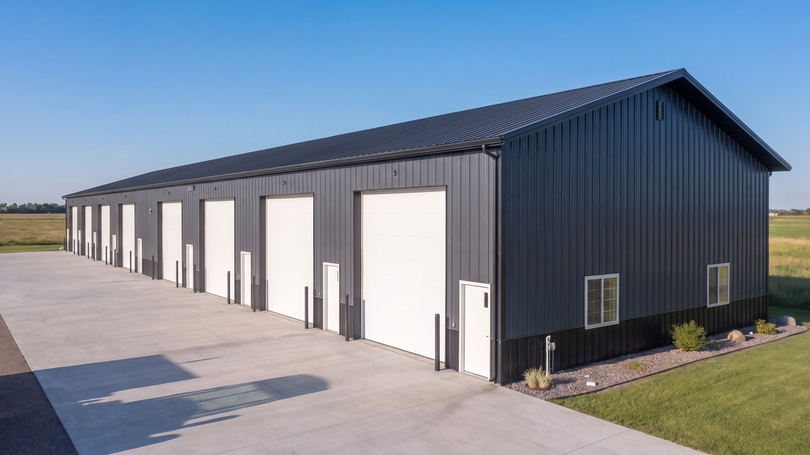

When it comes to housing livestock, the choice between monitor barns and standard pole barns can significantly affect both the welfare of your animals and your efficiency as a farmer. As a professional in the realm of Canadian steel buildings, understanding the distinct advantages of each barn type is crucial. This article explores the characteristics, benefits, and potential drawbacks of monitor barns and standard pole barns, ultimately guiding you to make an informed decision for your livestock’s needs.
Understanding Monitor Barns
Monitor barns are renowned for their distinctive architectural design. Characterized by a raised central section flanked by lower aisles, these barns are reminiscent of traditional barns found throughout North America. However, modern agricultural monitor barns incorporate advanced materials and technologies, enhancing functionality and aesthetics.
The key advantage of a monitor barn is its superior ventilation and lighting. The raised roof design allows for increased airflow, which is essential for maintaining a healthy environment for your livestock. Improved ventilation reduces the risk of respiratory issues, ensuring your animals thrive in a comfortable setting.
Additionally, the elevated centre section allows natural light to permeate the interior, promoting a brighter and more welcoming environment. This not only benefits the animals but also provides a better working space for farm operations. Whether you are raising horses, cattle, or smaller livestock, monitor barns offer a well-ventilated and illuminated space that mimics the animals’ natural habitat.
Advantages of Standard Pole Barns
Standard pole barns are a popular choice, particularly among those who value cost-effectiveness and scalability. Constructed using a series of poles driven into the ground to form the framework, these barns offer a straightforward and effective solution for housing livestock.
One key benefit of pole barns is their relatively low construction cost. Compared to other barn types, pole barns require fewer materials, which translates to significant savings. They are also faster to build, allowing you to have functional livestock shelter in a shorter time frame.
Another noteworthy advantage of standard pole barns is their adaptability. These structures can be customized easily, letting you adjust the size and layout according to current and future farm needs. Should your livestock population grow, extending a pole barn is typically a straightforward process without the complications of significant structural overhauls.
Material Considerations: Steel Building Kits
In today’s market, choosing the right materials for your barn is as important as selecting the design itself. Steel building kits have grown in popularity due to their durability, environmental resistance, and ease of assembly. Whether opting for a monitor or pole barn, steel kits offer a robust and sustainable building solution.
Steel barns withstand harsh Canadian weather conditions, including heavy snow loads and strong winds. They are also fire-resistant, providing an added layer of safety for your valuable livestock. Furthermore, steel requires minimal maintenance, freeing up more time for other farm duties and reducing long-term costs.
Which Barn Type Should You Choose?
Deciding between a monitor barn and a standard pole barn depends largely on your specific farming needs and priorities. If ventilation and natural light are at the top of your must-have list, then opting for a monitor barn might be the best fit. The design of a monitor barn inherently allows for a healthier environment and more enjoyable working conditions, which can positively impact both livestock and farmer productivity.
On the other hand, if budget constraints and expansion flexibility are more pressing concerns, then a standard pole barn could serve you better. The economic efficiency and ease of modification make pole barns a pragmatic choice, especially for those just starting in livestock farming or operating on tight budgets.
Integration of Technology in Modern Barns
Technological advancements have revolutionized barn designs and functionalities. Today, both monitor and standard pole barns can be equipped with automated feeding systems, climate control, and advanced monitoring systems to further enhance animal welfare and farm management efficiency.
Investing in technology means more control over farm operations and greater insight into livestock conditions, leading to better decision-making and optimized health outcomes for your animals. When integrating these systems, both types of barns can accommodate such technology, though the layout of a monitor barn might offer slightly more flexibility due to its segmented structure.
Environmental Sustainability and Barn Choice
Sustainability plays an increasingly important role in modern farming. Steel structures are recyclable and have a lower environmental impact compared to traditional wood construction. Additionally, the ability to incorporate renewable energy solutions, such as solar panels, is often easier with a steel framework, further reducing the environmental footprint.
When selecting your barn, consider not only the immediate benefits but also the long-term environmental impact. By choosing environmentally friendly materials and construction methods, you can contribute to sustainable agricultural practices, which benefits both the planet and your farm’s reputation.
Final Thoughts
The decision between monitor barns and standard pole barns involves multiple considerations, from budget and layout adaptability to ventilation and natural lighting needs. Both types of barns have their merits, dictated by specific farming requirements and future expansion plans.
For those inclined towards modern, efficient, and healthier environments, agricultural monitor barns stand out as the preferred choice. Conversely, if economic efficiency and flexibility are your guiding factors, the traditional approach of standard pole barns remains a viable option.
Ultimately, the right barn for your livestock should align with your operational goals, budget, and future growth potential. By evaluating these factors, alongside the insights provided here, you can make a decision that not only enhances livestock welfare but also bolsters farm success for generations to come.