
A tree comes down. The canopy is gone, the logs are stacked, and the garden feels suddenly lighter. But one thing remains: a stubborn stump, right in the middle of the lawn, path, or future patio. Ignoring it risks suckers, rot, and trips hazards. Digging it out by hand is a weekend‑killer. So what actually works?
For most domestic gardens, professional stump grinding wins over the DIY approach. Here is why—and when it genuinely makes sense to pick up the phone rather than the spade.
The Hidden Problem with Leaving a Stump in Place
Tree stumps do not simply sit there looking ugly. Over time, they begin to rot from the inside, attracting honey fungus, wood‑boring beetles, and other decay organisms that can spread to nearby trees and shrubs. Stump suckers—vigorous new shoots—often erupt from the root system, requiring repeated cutting back for years. Meanwhile, the buried roots gradually break down, creating uneven depressions that trip up mowers and ankles alike.
In short, leaving a stump is a long‑term maintenance headache disguised as an inert lump of wood.
DIY Stump Removal: What the YouTube Videos Don’t Show
The internet is full of enthusiastic tutorials. Burn it out (illegal in most built‑up areas without a permit). Rot it with chemical crystals (slow, messy, and hazardous to pets). Hire a chainsaw and carve it into a planter (still leaves roots intact). Then there is the classic “dig and winch” method—hours of labour, broken spade handles, and a hole the size of a small crater.
Most domestic gardeners seriously underestimate stump root spread. For a mature birch or apple tree, the main structural roots can extend two to three metres outward. Digging them out by hand means moving literal tonnes of soil. And even then, a leftover root chunk can sucker again the following spring.
DIY stump removal is not impossible on very small, shallow‑rooted stumps—think a dead buddleia or a young rowan under 15cm in diameter. For anything larger, the effort‑to‑outcome ratio is punishing.
What Professional Stump Grinding Actually Involves
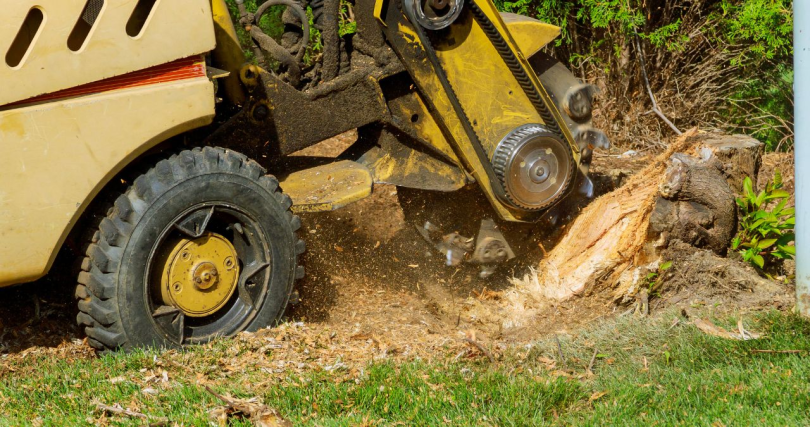
RTT Services uses a purpose‑built stump grinder: a powerful machine with a high‑speed rotating wheel studded with tungsten teeth. The operator grinds the stump down to well below ground level—typically 150–300mm deep—turning the entire stump and major surface roots into a pile of coarse, woody chips.
The process takes minutes for a typical domestic stump, not days. The chips can be raked into the hole as backfill, where they gradually decompose and improve soil structure. Alternatively, the operator can remove the arisings, leaving a clean depression ready for topsoil and turf or a new planting hole.
Crucially, professional grinding destroys the root crown—the part of the stump that produces suckers. No regrowth. No rot spreading to neighbouring plants. No trip hazards.
When It Is Worth Paying a Professional
Stump grinding becomes genuinely cost‑effective in three common domestic scenarios:
1. You are making a garden makeover. A visible stump ruins sightlines, blocks patio layouts, and prevents lawn mowing. Grinding removes the obstacle completely, often for less than the cost of a decent garden sofa.
2. The stump sits near paving, a drive, or a wall. Professional operators can grind flush to hard surfaces without damaging them. A DIY dig risks undermining foundations or cracking slabs.
3. You want the garden tidy for a property sale. Overgrown or “unfinished” corners put off buyers. A ground‑out stump signals a well‑maintained outdoor space—without the raw mess of a half‑dug hole.
The One Time DIY Might Work (And Even Then…)
If you have a very small stump—under 20cm across, from a short‑lived tree like a cherry plum or a fallen silver birch sapling—and you own a mattock, a pruning saw for roots, and three hours of good daylight, go ahead. Grind it manually by cutting the stump flush, drilling large holes, and using a stump‑removal granule over several weeks. But accept that patience is required: chemical rot takes four to six months.
For the other 95% of domestic stumps, hiring a professional removes the hard labour, the unpredictable regrowth, and the risk of making a bigger mess than you started with.
Safety, Insurance, and Peace of Mind
Professional tree surgery firms carry full public liability insurance. A stump grinder throws chips at high speed; even with guards, debris can bounce. A DIY operator in trainers and safety glasses is taking a real risk. Contractors also check for buried cables, pipes, and drainage before grinding—something many homeowners forget until a water supply pipe bursts.
Wrap‑Up: Spend Your Weekend on Something Enjoyable
A garden should be a place to relax, not a never‑ending battle against roots and suckers. Stump grinding is one of those rare jobs where the professional version costs less than the DIY version in time, sore muscles, and long‑term frustration. Call a reputable local tree surgery company, get the stump turned to chips before lunch, and spend the afternoon planting something beautiful in its place.