
By Nnanna Otuonye — Founder & CEO, AllTitanParts.com | Authorized OEM Dealer for Titan, SprayTech, Wagner & Speeflo | 5250 Gulfton St, Suite 1H, Houston, Texas 77081 | Over 20 Years in the Spray Equipment Industry
IN SHORT
Packing sets are the sealing stack that surrounds the displacement rod in an air-powered piston pump, letting it build and hold pressure. Many use leather elements combined with synthetic seals. They are the highest-turnover wear part on the pump, and their service life depends on coating abrasiveness, rod condition, and maintenance discipline.
The Part That Wears First on Every Piston Pump
On an air-powered piston pump — the Admiral, Commander, and PowrCoat machines — no component turns over as often as the packing set. It is the sealing stack that surrounds the moving displacement rod and lets the pump generate and hold pressure. Because it seals against a rod that moves on every stroke, in direct contact with coating, it wears steadily, and it is behind the large majority of pressure and leakage complaints on these machines.
Understanding packings — what they are made of, how they wear, and what determines their service life — is central to keeping an air-powered pump productive. The packing sets and related sealing components for these machines are stocked as air powered pump packing replacements, and knowing how to get the most from them is worth more than any single part.
What a Packing Set Is Made Of
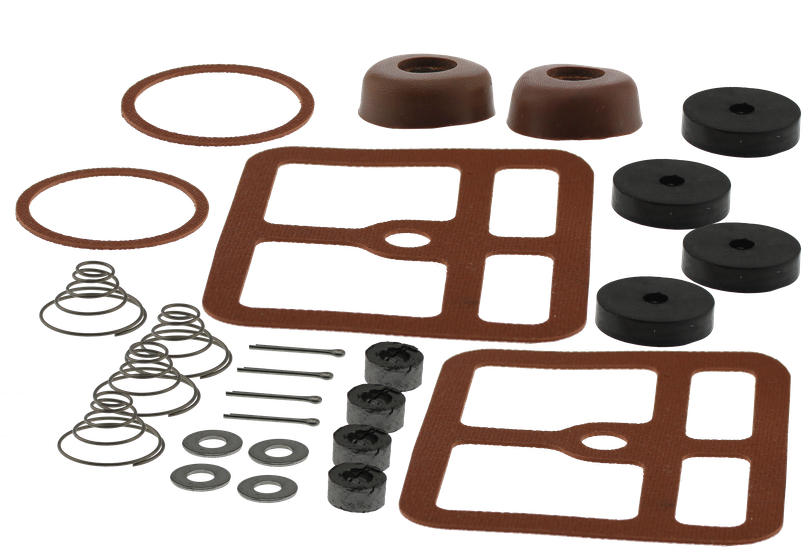
A packing set is not a single seal but a stack of sealing elements, and on many air-powered pumps that stack includes leather elements alongside synthetic components. Leather has a long history in high-pressure fluid pumps for a reason: it conforms to the rod, holds lubricant well, and offers strong resistance to the solvents and coatings these pumps handle.
The Titan leather packing sets used across the Admiral, Commander, and PowrCoat pumps are engineered for this duty. The stack is assembled so the elements adapt to provide an optimal seal as they seat and wear — packings that automatically adjust to maintain their sealing performance are a deliberate feature of these pumps, not an accident. Alongside the leather, synthetic seals and springs complete the stack, each with a role in maintaining the seal under pressure.
How Packings Wear
Packings wear through friction against the displacement rod, and several factors accelerate that wear. The coating itself matters most: abrasive, high-solids industrial coatings — exactly what these pumps are built for — are harder on packings than thin materials. Every stroke drags abrasive particles across the sealing surface.
Rod condition matters just as much. A smooth displacement rod lets packings seal and wear evenly. A scored or pitted rod acts like sandpaper, destroying fresh packings in a fraction of their expected life. This is why rod inspection is inseparable from packing replacement — installing new packings on a damaged rod wastes them. Lubrication is the third factor: packings that run dry wear far faster than those kept properly lubricated.
The Symptoms of Worn Packings
Worn packings announce themselves clearly, and recognizing the signs early prevents the wear from cascading into rod damage.
- Coating leaking from the packing area — the clearest sign the seal has failed.
- The pump struggling to build or hold pressure, because the packings no longer seal the rod.
- Slower priming and inconsistent pressure as the seal degrades.
- Visible wear or extrusion on the packing elements during any inspection.
When these appear, the packing set needs replacement. Acting promptly matters: continuing to run on failed packings lets coating and pressure work against the rod and other components, turning a simple packing replacement into a larger repair.
Getting the Most Service Life
Packing service life varies widely, and the difference between a pump that needs frequent repacking and one that runs long between services comes down to maintenance discipline rather than the packings themselves.
- Keep the rod smooth. Inspect it at every service and replace it at the first sign of scoring, so fresh packings seal against a clean surface.
- Maintain lubrication. Properly lubricated packings last far longer than dry ones.
- Flush thoroughly after use. Coating left to dry in the pump abrades the packings on the next start-up.
- Match the packing set to the coating and the machine. The correct set for your pump and material seals better and lasts longer.
These habits routinely double or triple packing life. An operation that inspects the rod, maintains lubrication, and flushes diligently spends far less on packings — and far less on downtime — than one that runs until failure.
Matching the Packing to the Coating
Not all coatings ask the same thing of a packing set, and matching the packing to the material is part of getting good service life. The abrasive, high-solids protective coatings these pumps often run are the hardest on packings, dragging solid particles across the seal on every stroke. Thinner materials are gentler. The leather-and-synthetic construction of the standard packing sets is chosen to handle the demanding end of that range, which is why it holds up where a lighter seal would fail.
Solvent compatibility matters too. The packing materials must resist the solvents in the coating, or they degrade chemically on top of the mechanical wear. This is why using the correct packing set for the pump and material is not just a fitment question — the right set is compounded to survive the conditions your specific work imposes. An incorrect or generic set may seal initially and then fail early against a solvent it was not built for.
For an operation running varied coatings, the practical approach is to use the packing set specified for the pump and confirm it suits the most demanding material in regular use. Where a pump runs consistently punishing coatings, expect a shorter packing interval and plan for it, rather than being surprised. Matching the packing to the work, and stocking accordingly, keeps the pump sealing reliably across the range of materials it handles.
Stocking Packing Sets
Because packings are the highest-turnover part on an air-powered pump, keeping a set on the shelf for each machine is standard practice. A packing replacement with a set on hand is a bench repair completed in a session. The same repair without the part in stock is a multi-day wait while the machine sits idle.
Match the set to your specific pump — the Admiral, Commander, and PowrCoat models use packing sets suited to each — and confirm the correct part against the machine’s diagram before ordering. Keeping the rod condition in mind at the same time means you order a rod alongside the packings if inspection calls for it, completing the repair in one pass rather than two.
Frequently Asked Questions
What is a packing set in an air-powered pump?
A packing set is the sealing stack that surrounds the displacement rod, letting the pump build and hold pressure. On many air-powered pumps it combines leather elements with synthetic seals and springs, and it is the highest-turnover wear part on the machine.
Why do air-powered pump packings wear out?
Packings wear through friction against the moving displacement rod, accelerated by abrasive high-solids coatings, a scored or pitted rod, and inadequate lubrication. Rod condition matters most — a damaged rod destroys fresh packings quickly.
How can I make packings last longer?
Keep the displacement rod smooth and replace it at the first sign of scoring, maintain proper lubrication, flush the pump thoroughly after use, and match the packing set to your coating and machine. These habits routinely double or triple packing life.
What are the signs of worn packings?
Coating leaking from the packing area, a pump that struggles to build or hold pressure, slower priming, and visible wear on the packing elements. Replace them promptly, since running on failed packings can damage the rod and other components.
About the Author
Nnanna Otuonye is the founder and CEO of AllTitanParts.com, an authorized OEM dealer for Titan, SprayTech, Wagner, and Speeflo spray equipment, located at 5250 Gulfton St, Suite 1H, Houston, Texas 77081. With over 20 years in the spray equipment industry, he supplies painting contractors and industrial coating professionals across the United States with genuine factory parts and same-day shipping on orders placed before 3PM CST.