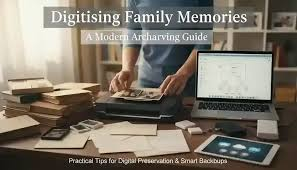

A home holds more than furniture and possessions. It also gathers stories: the reason a room was renovated, the books passed between generations, the family photographs tucked into drawers, and the documents that explain how a property has changed over time. A thoughtfully organized digital archive can bring these pieces together, making them easier to preserve, find, and share. It does not require a complicated system. The key is deciding what belongs in the archive, how to organize it, and which information should remain private.
Choose What the Archive Is For
Before scanning papers or creating folders, decide who will use the archive and what they should be able to do with it. A family may want a private record of renovations, appliance manuals, and home-related documents. A reader might build a catalogue of books, notes, and recommendations. Someone preparing a home for sale may need a clear history of upgrades, warranties, and maintenance.
These purposes can overlap, but they do not all call for the same level of access. A public page about a restored kitchen can share the design choices and lessons learned, while insurance records, personal correspondence, and identifying details stay in private storage. Thinking about access at the start helps prevent a useful archive from becoming an accidental collection of sensitive information.
Organize Records So They Stay Useful
A digital archive should make everyday questions easier to answer. Use a small number of consistent categories, such as property documents, maintenance, renovations, books and writing, and family history. Within each category, name files with a date and a plain description. “2025-04-roof-inspection.pdf” is more informative than “scan004.pdf,” especially when someone needs to find a record years later.
- Property: Keep copies of surveys, permits, warranties, inspection reports, and major purchase documents together.
- Maintenance: Record dates, contractors, materials, and follow-up tasks for repairs and routine work.
- Books and family stories: Add publication details, short notes, photographs of meaningful editions, and the names of people connected to them.
- Renovations: Save before-and-after photographs, product specifications, receipts, and decisions that may help with future repairs.
Keep original documents where they belong and treat digital copies as a convenient backup, not automatically as a legal substitute. For important records, use a secure storage service and maintain another copy on a separate device or location. Review the archive once or twice a year to remove duplicates, check that files open, and update contact or warranty information.
Preserve the Stories Behind the House
Documents explain what happened; a few lines of context explain why it mattered. When adding a photograph of a room, note when it was taken and what changed. If a well-loved book has a handwritten inscription, record who gave it and when, if that information is known. These small descriptions turn an orderly folder into a family resource rather than a pile of disconnected scans.
For a shared household, agree on simple conventions. One person can manage the folder structure, while other family members contribute captions, photographs, or reading notes. Avoid assuming that everyone recognizes the people or places in old images. A name, approximate date, and location can make an otherwise puzzling photograph meaningful to the next generation.
Sharing a Home or Literature Project Online
Some families and homeowners choose to publish selected parts of an archive as a blog or project website. This can be a good way to document a renovation, share book lists, or tell the history of an older property. Write for readers who need a practical answer: explain what the project involved, what choices were made, and what you would do differently. Specific details are more helpful than broad claims, and photographs should have descriptive captions.
If the site already attracts search traffic, use actual performance data to decide what to improve. A page that receives meaningful search impressions may deserve clearer explanations, a related follow-up article, or links from other relevant pages on the same site. A practical overview of AI citation data in Search Console can help publishers think about which pages are being surfaced and where connected content may strengthen coverage. Treat those signals as clues, not guarantees: a page still needs accurate information and a clear benefit for its reader.
Privacy deserves equal attention. Remove street numbers, alarm details, personal schedules, and documents that reveal financial or legal information. Get permission before publishing another person’s photographs, letters, or family memories. A public archive should share what is useful without exposing details that household members expected to remain private.
Where Digital Collectibles Fit—and Where They Don’t
Some homeowners and writers explore digital collectibles for artwork, a limited digital edition, or a record of a creative project. These tools can document ownership of a digital item within a particular system, but they do not replace a property deed, a contract, or a reliable backup of the underlying files. Anyone considering a blockchain-based project should first define what the token represents, who retains rights to the artwork, and what happens if the platform changes or disappears.
If a project genuinely needs custom blockchain programming, it may make sense to hire an NFT smart contract developer only after writing down the deliverables, testing requirements, and ownership terms. Osdire’s hiring guide discusses an offer-based approach that can make scope and pricing clearer. For most household archives, though, conventional cloud storage, clear file names, and dependable backups are simpler and more useful than adding a token.
A Small System That Lasts
A digital home archive succeeds when people can maintain it without specialist knowledge. Start with a few meaningful categories, write short captions while memories are fresh, protect private records, and back up important files in more than one place. Whether the collection centers on a property, a family library, or both, consistent care will make it easier to answer practical questions today and preserve the stories that might otherwise be lost tomorrow.