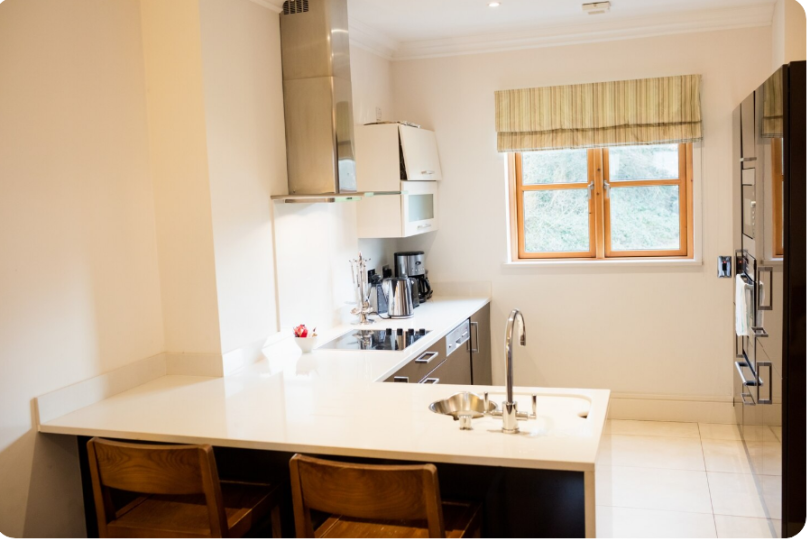

A tight galley kitchen in a Sterling townhome, a compact L-shape in a Cascades condo, a narrow 100-square-foot rectangle from a 1980s Countryside build: Northern Virginia has no shortage of small kitchens, and most of them were designed before the way we actually cook and entertain changed. Modern small-kitchen renovations aren’t about cramming more into less space. They’re about editing down to what earns its keep, rethinking vertical storage, and picking appliances sized for the footprint rather than defaulting to standard.
Done right, a 90 to 120-square-foot kitchen can outperform a poorly designed 200-square-foot one. The key is to treat every inch as a design decision rather than filling space on autopilot. An experienced kitchen remodeler who has worked on dozens of compact Loudoun and Fairfax County kitchens knows the specific tricks that add function without requiring a wall to come down, and which choices tend to produce regret six months in.
Homeowners in the Sterling area have a choice; choose experienced, well-versed remodelers like WellCraft Kitchen and Bath. Following is a practical guide to the specific strategies that work in small Northern Virginia kitchens, regardless of which contractor handles the project.
Layout Before the Cabinets
The biggest gains in a small kitchen come from layout, not finishes. A galley that looks cramped often has wasted clearances, awkward appliance placements, or a door swing interfering with prep space. Before touching cabinets, it’s worth running the existing layout against established design standards.
The National Kitchen & Bath Association publishes kitchen planning guidelines that cover minimum work aisle widths (42 inches for a single cook, 48 inches when an appliance door opens into it), the classic work triangle ranges (each leg between 4 and 9 feet, total under 26 feet), landing areas around appliances, and seating clearances. Small kitchens often quietly violate one or two of these rules, and fixing the violations matters more than fancy finishes.
In Sterling, the most common small-kitchen fixes are: moving the refrigerator to the end of a run to free up perimeter wall, swapping a 30-inch range for a 24-inch or 30-inch slide-in to recover cabinet space, and reorienting the sink to get natural light while protecting the work triangle.
Go Upward
Vertical storage is almost always the highest-return move in a small kitchen. Upper cabinets that stop at 84 inches instead of reaching 96 inches leave a foot of prime storage behind. Open shelving above the uppers is a dust catcher. Full-height upper cabinets, or a soffit-free design with crown detail, often add 30 percent more usable cabinet volume in the same footprint.
Pantry design matters too. A tall 84- or 90-inch pantry cabinet with pull-out shelves stores roughly three times as much as the same pantry with fixed shelves. The trade-off is cost, but the daily-use payoff is high. Corner pantries with lazy Susans or magic corner hardware recover space that would otherwise be dead inside the cabinet box.
Pick Appliances According to Size
The default 36-inch refrigerator and 30-inch range that dominate American kitchens aren’t the only options. In a small Sterling kitchen, a 30-inch counter-depth refrigerator can save 6 inches of wall space and prevent the fridge from jutting into the walkway. A 24-inch dishwasher is standard, but an 18-inch compact dishwasher works for one- or two-person households and frees up 6 inches of base cabinet space.
Induction cooktops also open up layout options. They don’t need a gas line, they’re safer, and they’re more energy-efficient than electric coils or gas. Energy-efficient choices compound over time: ENERGY STAR-certified refrigerators are about 9% more energy-efficient than federal minimums and save roughly $150 over a 12-year lifespan. Applied across a fridge, dishwasher, and range, the savings matter, especially in an all-electric home.
Microwave placement is another small-kitchen lever. An over-the-range microwave eats hood ventilation capacity. A microwave drawer built into the island or a 24-inch base cabinet preserves overhead ventilation and frees up upper cabinet space.
Use the Ceiling and the Floor Differently
Lighting makes a small kitchen feel larger or smaller. A single overhead fixture in a 120-square-foot kitchen casts shadows everywhere a person tries to work. Layered lighting brightens work surfaces and adds apparent depth. Under-cabinet LED strips at 2700K to 3000K produce a warm light that makes backsplashes and countertops look better and eliminates shadow on the cutting area.
Floor material choices affect visual size. Large-format tile (24×24 or 12×24) has fewer grout lines and makes a room read larger than 12×12 tile. Running plank flooring parallel to the longest wall visually elongates the space. Light floors generally expand, dark floors compress.
Backsplash and Countertop Interaction
In a small kitchen, the backsplash and countertop read as one continuous surface most of the time. Busy-patterned backsplashes and heavily veined countertops clash, making the space feel chaotic. The dominant visual should be one or the other, not both.
Quartz countertops remain the most popular choice in the Dulles corridor for small kitchens, specifically because they allow a busier backsplash without overwhelming the room. For maximum visual expansion, a continuous quartz slab backsplash behind the range creates a single uninterrupted surface and is easier to clean.
Budget for the Size
Small kitchens aren’t proportionally cheaper than large ones. Many of the fixed costs don’t scale down with square footage. In Northern Virginia, a full small-kitchen remodel with mid-range finishes typically runs $45,000 to $85,000, depending on structural work, appliance selection, and cabinet grade.
Cutting costs sensibly means stock or semi-custom cabinets instead of full custom, quartz instead of natural stone on countertops, keeping plumbing and major electrical in place where possible, and choosing one splurge item rather than going premium across the board. Cutting costs poorly means discount cabinets that delaminate in two years, budget appliances that fail in four, and a tile backsplash installed on a substrate that wasn’t prepped right.