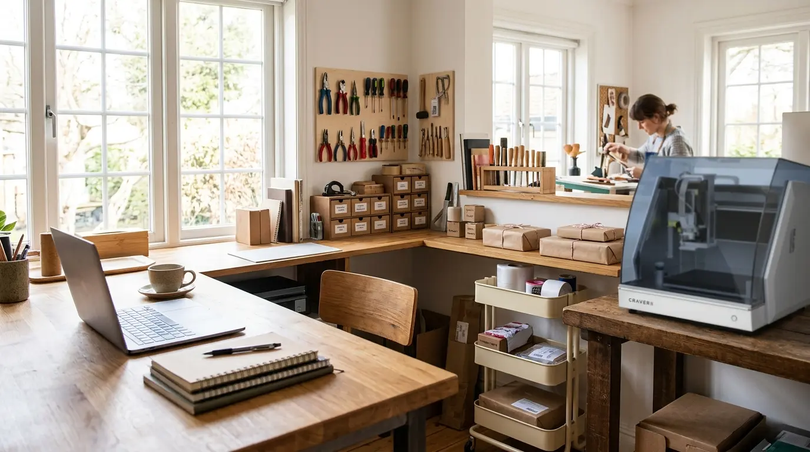

A spare bedroom can become more than a place to store boxes. For a writer, designer, independent bookseller, or small online business owner, it can be a practical base for work—provided the room, household routine, and digital tools are planned together. The goal is not to turn every corner of home life into a workplace. It is to create a setup that supports focused work without making the rest of the home harder to enjoy.
That takes a little thought before buying a desk or building a website. Consider what the business actually needs, how its work will fit around family life, and which improvements make sense for the property. A simple, deliberate plan can prevent a home office from becoming an expensive room that looks good but does not help the work get done.
Choose a workspace around the work
Start with the tasks that fill a typical week. A novelist may need quiet, good lighting, and space for reference books. Someone selling handmade goods may need durable surfaces, storage, and room to photograph products. A consultant who spends much of the day on calls may value sound control and a reliable internet connection more than built-in shelving.
Then look at how the room is used at different times of day. A desk in a shared living area may be fine for occasional work, but it can be difficult to leave a laptop and paperwork out when children need the table for homework or meals. If a separate room is not available, use a defined zone: a compact desk, a closed storage unit, and a routine for packing work away at the end of the day.
Comfort matters, but it need not mean an elaborate renovation. Position the screen to limit glare, choose a chair that supports long sessions, and keep frequently used items within reach. For video calls, a plain background and a lamp placed in front of you can be more useful than decorative upgrades. Spend first on what removes a daily obstacle.
Set household boundaries before work expands
Home-based work is easiest to sustain when everyone knows when the workspace is available and when the workday ends. Agree on quiet periods, call times, and shared-room rules. A visible calendar or a simple sign on the door can help children understand when interruptions are urgent and when they can wait.
Boundaries also protect the worker. Without a commute, it is easy to answer messages late at night or let small jobs spread across the weekend. Decide on working hours, take breaks away from the desk, and use a closing routine—saving files, clearing the surface, and writing down the next task—to mark the end of the day.
Check the property implications
Before making structural changes or inviting customers to the house, check what applies to your situation. Renters should review their lease and ask the landlord before installing fixtures or altering a room. Homeowners may need to consider local rules, insurance terms, and whether the business changes how the property is used. A quiet writing practice and a steady stream of customer visits can have very different implications.
Keep business equipment and household finances organized from the start. Store receipts, track expenses, and ask a qualified tax professional which costs may be deductible in your circumstances. If clients or contractors visit, think about parking, access, privacy, and safety. These small checks are easier to make before the business becomes busy.
Build the online side in stages
A polished website is not always the first thing a new business needs. Begin with a clear description of the offer, a way for customers to get in touch, and a few examples that show the quality of the work. An author might publish a short portfolio and information about events; a home-based service provider might explain the process, service area, and expected turnaround.
As the idea develops, decide whether an off-the-shelf website is enough or whether the business needs a custom feature, such as a booking system, client portal, or product configurator. A programmer for an early-stage startup may be useful when the digital product is central to the offer, but it helps to define the problem before commissioning code. Osdire’s guide covers preparing a brief and comparing options; the same principle applies to any small business project: describe the user, the task, and what a successful first version must do.
Keep the initial scope modest. List essential features separately from ideas that can wait, agree how progress will be reviewed, and make sure you understand who will maintain the finished work. A small, testable version can reveal what customers actually use before you invest in a larger build.
Help the right people find your work
Publishing useful material can support a creative business, whether that means essays about restoration, reading lists for a book community, or practical guides related to a service. Promotion is most effective when it reaches people who have a real reason to care. Before pursuing guest posts or other placements, assess whether a site’s subject, audience, editorial standards, and link placement make sense. This backlink quality guide outlines checks that can help distinguish a meaningful mention from a link that is unlikely to reach relevant readers.
Do not treat every opportunity as valuable simply because it promises exposure. A relevant article that introduces your work to an interested audience is more useful than a placement that feels disconnected from your business. Keep the content honest and helpful, and make sure any link appears naturally in the context of the discussion.
Make the setup earn its place
A successful home-based business does not require a perfect office or a complicated digital platform. It needs a workspace suited to the daily tasks, household agreements that protect both work and family time, and a property setup that fits the way the business operates. Build the online presence in steps, spend on problems that are already clear, and review the arrangement after a few months. The best home office is not the most impressive one; it is the one that helps the work happen while leaving room for the rest of life.