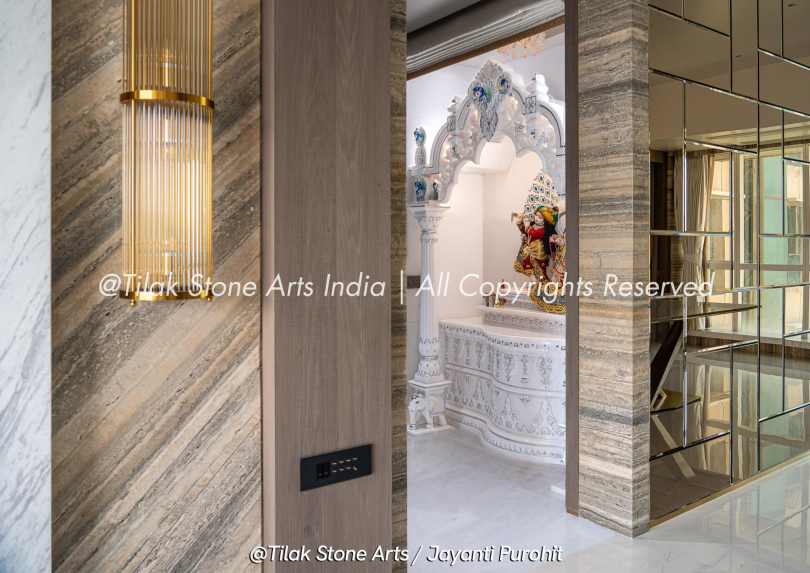

The atmosphere of a home is rarely accidental. Every room carries a certain weight, a particular energy that shapes how people feel within it. Spaces devoted to prayer and worship carry that responsibility even more. A thoughtfully designed temple does not just occupy a corner. It quietly anchors the entire home in something deeper and more purposeful.
There is a reason why so many families feel that their daily rituals lack grounding. A Hindu temple for home, when designed with genuine intention, becomes the most purposeful space in the entire household. It draws on centuries of sacred design tradition, translating that wisdom into something personal and enduring. When proportions are right and materials chosen with care, the space functions as a genuine spiritual centre for the entire family.
Where Architecture Begins to Speak
The Form That Carries Meaning: Every structural detail of a temple communicates something, even before a single prayer is offered. The curve of an arch, the height of a platform, the spacing between pillars. Each choice either supports or undermines the sanctity of the space. A well-designed temple does not rely on ornamentation alone. It achieves its character through proportion, balance, and thoughtful material selection.
Vertical Reach and the Power of Shikhara Architecture: The upward taper seen in shikhara architecture, the classical tower form rooted in Hindu temple tradition, does more than satisfy aesthetic convention. It directs the gaze skyward, encouraging a contemplative mental posture even in a domestic setting. Families who incorporate this vertical language into their home temple often describe a palpable shift in how the space feels, more than any decorative addition could achieve.
Pillars, Arches and the Grammar of Sacred Space: Pillars serve a dual purpose in temple design. They provide structural definition, but they also mark the visual boundary between the sacred and the everyday. When carved in Vietnam White Marble, even simple cylindrical forms carry quiet gravitas. Their presence delineates the temple as a distinct zone, not just a decorative item but a threshold that one consciously enters.
What Marble Does That Other Materials Cannot
Material Memory and the Sense of Permanence: Vietnam White Marble has a particular quality that synthetic surfaces cannot replicate. It holds light differently, responds to age with a deepening rather than a dulling, and creates a sense of permanence that most materials never achieve. Families who invest in marble temples often remark that the space feels as though it has always belonged there, structurally rather than aesthetically placed.
Bas-Relief Carving as Visual Devotion: The practice of bas-relief carving transforms a flat marble surface into something that carries genuine narrative weight. Lotus motifs, divine figures, and sacred geometric patterns carved in low relief become more than decoration. Each element holds scriptural meaning rooted in tradition. A temple surface adorned with skilled hand-carving communicates devotion in a form that words cannot quite replicate.
Design Details That Shape Daily Ritual
Why Thoughtful Design Encourages Consistent Practice: A space that feels incomplete or visually unresolved discourages use without the inhabitant fully understanding why. This is one of the quieter costs of poor temple design, the gradual erosion of daily practice, not through any conscious decision but through accumulated discomfort. Getting the design right from the beginning makes returning to the space feel natural rather than effortful.
Key design elements that shape how a home temple functions day to day:
- Platform height should position the deity at eye level when seated, encouraging a natural, comfortable prayer posture rather than straining.
- Lighting placement above or beside the sanctum allows Vietnam White Marble’s natural luminosity to enhance the ambiance across morning and evening rituals.
- Niche depth must accommodate the scale of deity arrangements, as a shallow recess creates visual crowding that diminishes the overall sanctity of the space.
- Ventilation near the lamp and incense area maintains freshness across multiple daily uses, preventing the accumulation of smoke that dulls both marble surfaces and atmosphere.
Vastu Compliance and Structural Intention: Vastu Shastra offers a design framework that goes beyond personal preference. North-east placement, specific platform heights, and the use of pure, natural materials all contribute to a sense of ease within the space. Families who follow these principles during the design phase often report greater focus and calm during prayer, partly because the space itself is working in harmony with their practice.
When the Temple Becomes the Heartbeat of the Home
Coherence Between Temple and Interior: A temple that clashes with its surroundings creates a persistent visual tension that is difficult to ignore. The sacred space need not mirror the rest of the home exactly, but it should relate to it. Vietnam White Marble’s cool luminosity sits comfortably alongside warm wood tones, neutral walls, and both traditional and contemporary furniture styles, giving it unusual versatility across different interior palettes.
Craftsmanship as a Decades-Long Return: Poorly crafted temples reveal their limitations quickly. Surfaces dull, joints separate, and the space begins to feel worn before it has aged meaningfully. Quality craftsmanship, especially in natural stone, holds its character across decades. The care taken in the beginning repays itself every single morning, not in any dramatic way, but in the quiet dignity of a space that never needs to be apologised for.
The Sacred Space You Choose to Build Today
A home temple shaped by careful design becomes more than a place of prayer. It becomes a reference point for the household, steady through busy seasons and reassuring through difficult ones. If you are planning a home temple and want the space to serve your family well, connect with a specialist who understands both the craft and the cultural meaning behind every design decision.