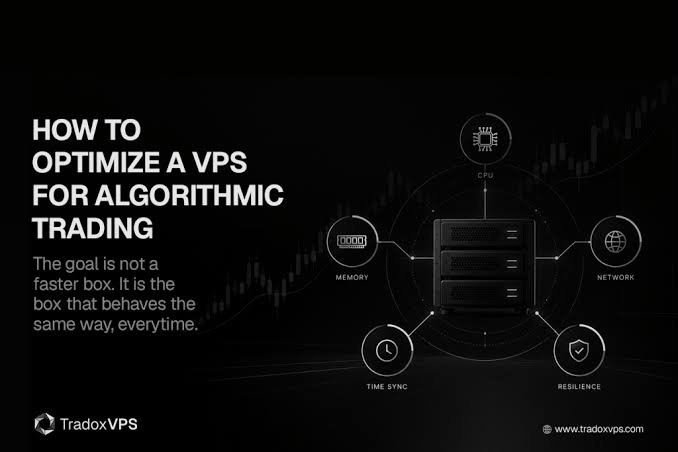

A virtual private server can provide a convenient environment for cryptocurrency trading applications, but its performance depends on how the server is configured and maintained. Even a hosting package with good hardware specifications may experience slowdowns if applications consume excessive resources or the operating system is not properly managed.
Optimization involves improving the way the server uses CPU, RAM, storage, and network resources. It also includes maintaining software, reducing unnecessary background activity, and monitoring application performance.
For cryptocurrency traders who operate automated bots and market-monitoring tools, proper optimization can help maintain a more responsive working environment.
A well-maintained Bitcoin VPS can support applications more efficiently when its resources are configured according to actual requirements.
Understand Your Current Server Performance
Before making changes, establish how the server currently performs.
Check CPU usage, available RAM, storage consumption, network connectivity, and application activity.
Windows users can use Task Manager and Resource Monitor.
Linux users can use system-monitoring tools such as top, htop, free, and df.
These tools help identify whether the server is experiencing CPU pressure, memory shortages, or storage limitations.
Without monitoring, users may make unnecessary changes that do not address the actual problem.
Remove Unnecessary Applications and Services
Every installed application can consume storage and may introduce background processes.
Remove software that is no longer required.
Review startup applications and disable unnecessary services where appropriate.
Avoid installing unrelated programs on a server dedicated to cryptocurrency trading.
A cleaner environment can make resource usage easier to understand and manage.
However, do not disable essential operating system services without understanding their purpose.
Optimize CPU Usage
CPU resources are used whenever applications perform calculations or process instructions.
If several trading bots operate simultaneously, their combined CPU usage may become high.
Review application settings and determine whether any process is performing unnecessary calculations.
Some software allows users to adjust update intervals, background processing, or monitoring frequency.
If a bot repeatedly consumes excessive CPU resources, check its configuration and developer documentation.
Upgrading CPU capacity may be appropriate when the workload genuinely requires additional processing power.
Manage RAM Efficiently
Insufficient RAM can affect application responsiveness.
Close unnecessary applications and review background processes.
If several trading tools are running simultaneously, determine whether all of them need to remain active.
Monitor memory usage over time rather than checking it only once.
For a Crypto VPS, adequate RAM is particularly important when running several applications or maintaining larger data sets.
If memory usage consistently approaches the available limit, consider upgrading the server.
Maintain Storage Space
Storage shortages can cause operating system and application problems.
Review available disk space regularly.
Remove unnecessary temporary files, outdated installation packages, and logs that are no longer required.
However, preserve important application records and security logs according to your retention requirements.
SSD and NVMe storage can also improve data access performance compared with traditional hard drives.
Customers should verify the storage technology included in their hosting package.
Improve Network Connectivity
Network quality influences communication between trading applications and cryptocurrency exchanges.
Monitor response times, packet loss, and connection stability.
If the server experiences frequent network problems, investigate whether the issue is related to the hosting provider, routing, or external exchange infrastructure.
Choosing an appropriate server location may improve connectivity.
However, users should test actual API response times instead of relying solely on geographical distance.
Keep the Operating System Updated
Operating system updates can improve stability, compatibility, and security.
Install updates according to the official recommendations for Windows or Linux.
Restart the server when required and verify that important applications return to normal operation.
Avoid postponing important security updates for extended periods.
Configure Applications to Run Efficiently
Trading applications often include settings that influence resource consumption.
For example, users may be able to adjust how frequently market data is requested or how much historical information is stored.
Configure applications according to actual requirements.
Avoid running duplicate monitoring processes or unnecessary background tasks.
Check the developer’s documentation before changing advanced settings.
Use Background Services Carefully
Some applications need to continue operating after the user disconnects from the remote server.
Windows scheduled tasks and Linux system services can help manage background applications.
Configure automatic startup carefully and test how the software behaves after restarting.
A trading bot should reconnect correctly and avoid unintended duplicate orders.
Monitor Server Health Regularly
Monitoring helps identify performance problems before they become serious.
Review CPU, memory, disk usage, and network connectivity.
Set up alerts when important resource limits are reached, if supported.
Also monitor application logs for repeated errors or unexpected restarts.
A bitcoin vps should be maintained regularly rather than left unattended after installation.
Protect Performance Through Security
Security problems can also affect server performance.
Malware, unauthorized applications, and suspicious background processes may consume CPU and network resources.
Use strong authentication and firewall restrictions.
Install software only from trusted sources and maintain operating system updates.
Investigate unfamiliar processes rather than terminating them without understanding their purpose.
Consider Upgrading When Necessary
Optimization cannot compensate for every hardware limitation.
If applications consistently require more CPU, RAM, or storage than the server provides, an upgrade may be necessary.
Before upgrading, identify the specific resource causing the problem.
A CPU upgrade will not solve a storage shortage, and additional RAM will not necessarily improve a network-routing problem.
Choose upgrades according to measured requirements.
Final Thoughts
Optimizing a Bitcoin VPS involves monitoring resource usage, removing unnecessary software, managing CPU and RAM, maintaining storage, improving connectivity, and keeping applications updated.
A properly optimized crypto vps can provide a more efficient environment for cryptocurrency trading software and automated monitoring tools.
Regular maintenance and performance testing help ensure that the server continues to meet application requirements as workloads change.