
Renovation has quietly become one of the most searched home topics of the year, and it’s not hard to see why. Material prices have shifted, labor markets have tightened in some regions and loosened in others, and a wave of homeowners who postponed projects during the last few years are finally pulling the trigger. If you’re planning a remodel in 2026, the old rules of thumb — “budget 10-15% extra,” “kitchens run $X per square foot” — are only a rough starting point. The real numbers depend on a handful of shifting factors that are worth understanding before you commit to a contract.
This guide breaks down what’s currently moving renovation budgets, room-by-room price ranges, and how to build an estimate that actually holds up once the work begins.
Why Renovation Costs Look Different This Year
A few trends are shaping 2026 remodeling budgets more than usual:
Material costs have stabilized but not dropped. After several volatile years, lumber, drywall, and fixture pricing have leveled off — but “leveled off” means holding at elevated prices, not returning to pre-inflation numbers. Homeowners budgeting off older price guides are often surprised by how much materials alone now cost.
Skilled labor remains the tightest constraint. In many metro areas, demand for licensed electricians, plumbers, and general contractors still outpaces supply. That scarcity shows up directly in labor quotes and in longer project timelines — a renovation quoted at six weeks can easily stretch to ten or twelve if your contractor is juggling multiple jobs.
Energy-efficient upgrades are pulling budget share. Insulation, heat pumps, energy-efficient windows, and smart thermostats are increasingly bundled into renovation projects rather than treated as separate purchases, partly because of ongoing utility rebate programs. This shifts total project cost upward even for renovations that aren’t primarily “green” in intent.
Small-scope, high-impact projects are trending over full guts. Rather than gutting an entire kitchen or bathroom, more homeowners are opting for targeted updates — refacing cabinets instead of replacing them, refinishing floors instead of tearing them out — as a way to modernize a space without a full-renovation price tag.
Room-by-Room Renovation Costs
These ranges reflect typical mid-range renovations; high-end finishes or structural changes (moving walls, plumbing, electrical rerouting) push costs well above these figures.
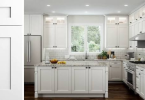
Kitchen: $15,000–$45,000 for a mid-range remodel (new cabinets, countertops, appliances, flooring). Cabinet refacing alone runs $4,000–$9,000, a fraction of a full replacement.
Bathroom: $8,000–$20,000 for a full remodel. A refresh limited to fixtures, vanity, and paint can come in under $5,000.
Basement finishing: $18,000–$40,000, heavily dependent on whether plumbing (for a bathroom or wet bar) is involved.
Whole-home interior repaint and flooring refresh: $6,000–$15,000, one of the highest ROI updates for the cost, particularly ahead of a sale.
Room additions: $80,000–$200,000+, driven almost entirely by square footage and whether the addition requires new foundation work.
What Actually Moves These Numbers
Beyond the room itself, four variables account for most of the swing between the low and high end of any renovation estimate:
- Scope of structural change. Cosmetic updates (paint, fixtures, surfaces) are dramatically cheaper than anything involving moved walls, plumbing rerouting, or electrical panel upgrades.
- Material tier. The gap between builder-grade and premium finishes — countertops, flooring, cabinetry — can double a room’s cost even at identical square footage.
- Permit and code requirements. Older homes often trigger code-compliance work (electrical, plumbing, structural) that isn’t part of the original renovation wish list but becomes mandatory once permits are pulled.
- Regional labor rates. Contractor labor costs vary significantly by metro area — a project priced at one number in a lower-cost region can run 30-50% higher in a high-demand urban market.
Building a Realistic Budget
The biggest budgeting mistake homeowners make isn’t picking the wrong finishes — it’s failing to account for the gap between an initial quote and the final invoice. A few practices help close that gap:
- Get itemized quotes, not lump-sum numbers, so you can see where labor, materials, and permits are each allocated.
- Add a 15-20% contingency for anything involving demolition, since older homes frequently reveal issues (outdated wiring, water damage, structural wear) once walls are opened.
- Separate “must-have” from “nice-to-have” line items early, so if costs run over, you know exactly what to cut without redesigning the project mid-build.
- Price materials before signing a contract, since contractor markups on materials can vary widely, and buying certain fixtures yourself can sometimes reduce total cost.
- Model your numbers before you commit. Running your square footage, material tier, and labor estimates through a dedicated home renovation cost calculator gives you a working budget you can compare against contractor quotes, instead of relying on national averages that may not reflect your region or project scope. FreeCalcHome’s renovation estimator is built for exactly this — plug in your room dimensions and finish level, and it outputs a cost range you can actually plan around before the first quote comes in.
Financing and Timing Considerations
With borrowing costs still a factor for many homeowners, more renovations in 2026 are being phased rather than done all at once — tackling a kitchen this year and a basement the next, rather than financing a full-home remodel in a single loan. This approach spreads cost impact but requires more careful planning, since sequencing matters (structural or plumbing work should generally happen before cosmetic finishes in adjacent spaces).
Timing renovations around contractor demand cycles can also meaningfully affect price — many markets see lower bids in late fall and winter, when contractor schedules have more open capacity compared to the traditionally busy spring and summer renovation season.
Final Takeaway
Renovation costs in 2026 aren’t simply “higher than before” — they’re being reshaped by material stabilization, labor scarcity, and a shift toward targeted, high-impact updates over full-scale overhauls. The homeowners who come out ahead aren’t necessarily the ones spending the most; they’re the ones who scope their project accurately, price materials and labor separately, and build a realistic number before signing anything.
Whether you’re planning a full kitchen overhaul or a modest refresh, running your specific numbers — square footage, finish tier, and regional labor rates — through a proper estimator beats guessing off a national average every time.