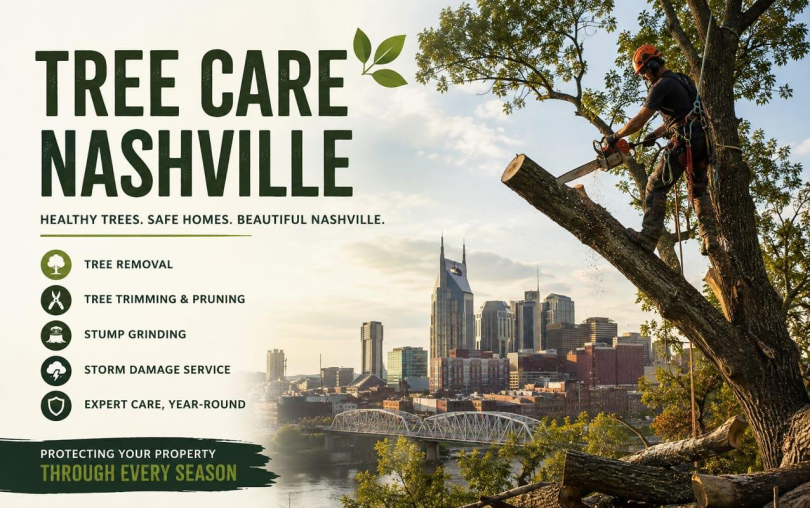

Why Nashville Homes Need Reliable Tree Care
Nashville’s mix of humid summers, sudden thunderstorms, and occasional winter ice puts real stress on trees, and that stress eventually shows up in your yard. A trusted tree service in Nashville understands how Middle Tennessee’s climate affects everything from young ornamentals to century-old oaks, and that local knowledge changes how a job gets handled. Homeowners in older neighborhoods near downtown deal with mature hardwoods, while newer subdivisions further out often have younger trees still establishing root systems.
Both situations call for different techniques, timing, and equipment, and a crew that only knows generic tree work tends to miss those distinctions. Choosing a provider who has worked across Davidson County for years means fewer surprises, faster diagnosis of problems, and pricing that reflects real conditions instead of guesswork. That local familiarity is often the difference between a tree that’s saved and one that becomes an emergency.
Spotting the Warning Signs Early
Most tree failures don’t happen overnight; they build up through small signals that are easy to miss if you’re not looking for them. Cracked bark, fungal growth at the base, leaning trunks, and thinning canopies is all indicators that a tree’s structural integrity is compromised. Homeowners often notice these changes but assume they’re cosmetic, when in reality they can point to root rot, disease, or internal decay that isn’t visible from the outside.
Catching these signs early gives you options that disappear once a tree becomes a genuine hazard. A professional inspection can determine whether pruning, cabling, or soil treatment will resolve the issue, or whether removal is the safer long-term choice. Waiting too long often turns a manageable repair into an expensive emergency, especially once storm season arrives and weakened limbs become projectiles.
Removal Done Without Risking Your Property
Taking a large tree down safely is one of the most technical jobs in residential landscaping, and it’s not something that should be attempted without the right training. Trees near power lines, fences, or a home’s foundation require careful rigging, directional cutting, and sometimes cranes to control exactly where each section falls. A single miscalculation can mean a cracked roof, a snapped fence line, or worse.
Beyond the cut itself, removal involves managing debris, protecting landscaping, and often coordinating with local permit requirements, since some large or protected trees in the Nashville area can’t be removed without approval. A thorough crew checks all of this before the first cut is made, not after. That upfront diligence protects your property and keeps the job from turning into a legal headache down the line.
Pruning as Preventive Maintenance
Pruning is frequently treated as a cosmetic afterthought, but it functions more like preventive maintenance for a living structure that keeps growing whether you plan for it or not. Removing deadwood, thinning dense crowns, and cutting back limbs that hang over rooflines reduces the surface area a storm has to grab onto. Trees that are pruned on a regular schedule are measurably less likely to drop large limbs during high winds.
Timing matters just as much as technique. Certain species, oaks in particular, need to be pruned during dormant winter months because cutting them during warmer weather increases susceptibility to diseases that spread through wounds. A well-timed prune also encourages healthier growth patterns the following season, which keeps a tree structurally sound for years rather than just looking neat for a few months.
Stump Removal and Reclaiming Yard Space
An old stump left in the yard isn’t just an eyesore; it can attract pests, become a tripping hazard, and interfere with landscaping plans for years. Grinding a stump down below grade allows homeowners to reseed, lay sod, or build a patio directly over the spot without leftover roots causing problems later. This step is often bundled with a removal, but plenty of stumps sitting from years-old jobs can be ground out separately.
The process itself generates a surprising amount of debris, and how a crew handles the cleanup says a lot about their overall professionalism. Chips and grindings should be hauled away rather than left as a mulch pile dumped across the lawn. A clean finish is a small detail, but it’s often what separates a rushed job from one done with genuine care for the property.
Storm Damage and Emergency Response
Tennessee’s weather doesn’t follow a predictable calendar, and neither does the damage it causes. Spring tornado watches, sudden summer downpours, and winter ice storms all create different failure patterns, from split limbs to entire trees uprooted overnight. When a tree comes down on a home, driveway, or vehicle, the priority shifts from planning to immediate risk reduction.
Emergency crews need to move quickly, but speed can’t come at the cost of safety, especially when downed power lines are involved. Getting people clear of the area and calling a crew equipped for after-hours response is the right first move, and documenting the damage with photos helps considerably when filing an insurance claim afterward. Homeowner’s insurance often covers removal when a storm is the direct cause, though coverage details vary by policy.
Choosing a Crew with the Right Credentials
Not every company advertising tree work carries the training or insurance to back it up, and that gap becomes obvious the moment something goes wrong. Certification from a recognized arborist organization signals that a crew understands tree biology, not just how to operate a chainsaw. That distinction matters most on complex jobs where the wrong cut can compromise a tree’s long-term health or destabilize its structure entirely.
Insurance coverage is equally important, since tree work carries genuine risk to both crew members and property. A company carrying substantial liability coverage protects homeowners from being on the hook if something goes wrong mid-job. Asking for proof of licensing and insurance before work begins is a reasonable request, and any credible provider will have that documentation ready without hesitation.
What a Fair Tree Service Estimate Looks Like
Pricing for tree work varies widely depending on size, location, and accessibility, which makes transparent estimates essential before any cutting starts. A tree tangled in power lines or growing close to a house requires more careful rigging than one standing alone in an open yard, and that complexity should be reflected clearly in the quote. Vague pricing or verbal-only estimates are red flags worth taking seriously.
A dependable tree service in Nashville provider walks through the scope of work, timeline, and total cost before anything begins, so there are no surprises once the job is underway. Written estimates protect both sides and make it easier to compare providers on more than just price. Homeowners who take the time to get a clear breakdown upfront tend to have smoother experiences overall, with fewer disputes once the work is finished.
Seasonal Planning for Long-Term Tree Health
Tree care isn’t a one-time event; it’s an ongoing relationship that shifts with the seasons. Late winter and early spring are ideal for structural pruning since trees are dormant and their branch patterns are easier to assess without full foliage in the way. Summer calls for monitoring drought stress and pest activity, while fall is often the right time to plan removals before winter storms create urgent situations.
Building a seasonal maintenance plan with a trusted provider means fewer emergency calls and healthier trees overall. Regular check-ins catch problems while they’re still manageable rather than after they’ve escalated into hazards. Homeowners who invest in this kind of ongoing care tend to spend less over time, since prevention is almost always cheaper than emergency response.
Protecting Your Property’s Long-Term Value
Mature, well-maintained trees add real value to a property, both in curb appeal and in the shade and privacy they provide over decades. Neglected or poorly maintained trees, on the other hand, can become liabilities that scare off buyers or trigger costly repairs after storm damage. The condition of trees on a lot is something appraisers and buyers increasingly notice during property evaluations.
Investing consistently in professional care, whether that’s regular pruning, timely removals, or prompt storm response, protects that value over the long run. A reliable tree service in Nashville partner helps homeowners think beyond the immediate job and toward the overall health of their landscape. That long-term perspective is ultimately what separates trees that thrive for generations from ones that become expensive problems down the road.