
No international team in any sport has a win rate quite like the All Blacks. Since the very first Test back in 1903, New Zealand’s sat above roughly 77% across their entire history — a number that’s almost absurd once you actually stop and think about how long they’ve been doing this. Three Rugby World Cup titles sit alongside that: 1987, 2011, and 2015, all three on home or near-home soil in a way that still gets debated by rival fans.
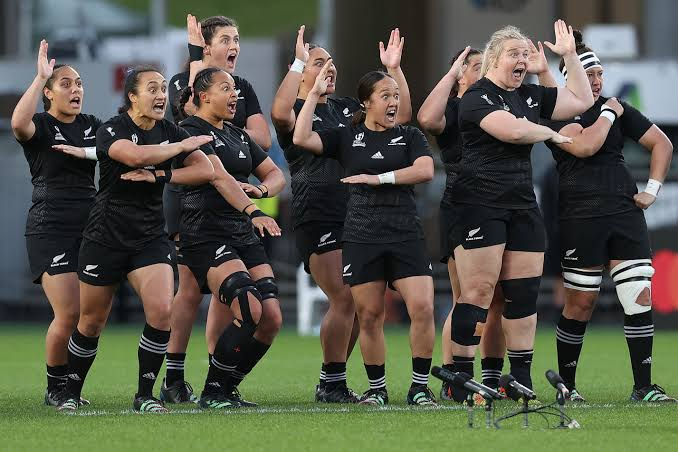
The jersey itself carries weight most sports jerseys don’t. All black, no sponsor logo cluttering the front for most of the 20th century, just a silver fern. And then there’s the Haka — Ka Mate, mostly, though Kapa o Pango gets pulled out for bigger occasions — performed before every single Test since the 1980s became the norm. Opposition teams have tried standing in a V-formation, walking forward, ignoring it entirely. None of it’s really worked as a psychological counter, if we’re honest.
If you’re the kind of fan who tracks a team’s form and injury list as closely as the actual scoreline, you’ve probably already got a habit of checking odds before kickoff too. dbbetonline.com tends to carry lines for the bigger All Blacks Tests, worth a look if that’s part of how you follow the sport.
Anyway. 2026’s been a genuinely wild year for this team, even by their standards.
A rough patch, and a coaching change nobody saw coming
Scott Robertson took over as head coach at the start of 2024, arriving off the back of seven straight Super Rugby titles with the Crusaders — an objectively ridiculous coaching résumé. But international rugby’s a different animal, and it showed. His first year in charge, the All Blacks lost to Argentina on home soil for the first time ever, plus defeats to South Africa and France. Last year got worse: New Zealand lost in Argentina for the first time in their history, then suffered a 43-10 defeat to the Springboks in Wellington — the heaviest loss in All Blacks history, full stop.
By January 2026, it was over. Robertson departed the role two years into a four-year deal, following a season review that reportedly included interviews with around 20 players, some of whom had lost faith in his approach entirely. Reports even suggested vice-captain Ardie Savea had indicated he wouldn’t play under Robertson going forward. Robertson’s overall record ended at 20 wins from 27 Tests — a winning percentage well behind predecessors like Steve Hansen (87%) and Graham Henry (85%), though still ahead of Ian Foster’s 70%.
The replacement search settled on Dave Rennie in March 2026, beating out Jamie Joseph for the job. Rennie’s an interesting pick — former Wallabies coach, former Glasgow Warriors coach, most recently with Japan’s Kobe Steelers, and now the first head coach of Pasifika heritage to lead the All Blacks, with Cook Islands ancestry through his mother. He’s contracted through the 2027 Rugby World Cup in Australia, where New Zealand will be chasing a fourth title and trying to end South Africa’s current run of dominance.
The new era kicks off
Rennie’s first Test in charge came July 4, 2026, against France in Christchurch, and he wasted no time making his mark — two uncapped players named on the bench, Ruben Love handed the starting fly-half jersey over more experienced options, and Ardie Savea confirmed as captain from the number eight position. Rennie’s brought in Sir Graham Henry as a co-selector too, which is its own small piece of symmetry given Henry’s the last coach to deliver a home World Cup win, back in 2011.
Rennie’s been fairly guarded about exactly what he’s changing tactically, mostly out of respect for the previous coaching staff, but he’s been clear that team culture is priority number one after the fractures that emerged under Robertson. “It’s a sprint from here,” he said after his appointment, with only around 15 months between his first Test and the 2027 World Cup kicking off.
The 2026 schedule is genuinely brutal
This year’s fixture list is one of the heaviest the All Blacks have faced in years. Home Tests against France, Italy, Ireland, and Australia are scheduled across Christchurch, Wellington, and Auckland — and two of those, Ireland and Australia, come at Eden Park, where New Zealand currently holds a 52-Test unbeaten streak. That number alone tells you something about why Eden Park’s nicknamed a fortress.
Then in August and September, the All Blacks head into an eight-match tour of South Africa — the first old-style long tour of the Republic in the professional era, complete with matches against United Rugby Championship franchises before a four-Test series against the Springboks at venues like Ellis Park. It’s being billed as a callback to the historic tours of the 20th century, and given how the Springboks have dominated the rivalry recently, it’s shaping up as the real measuring stick for Rennie’s side. The year wraps with a UK tour in November — Scotland, Wales, England — with a possible Nations Championship final on top of that, part of the new biennial tournament folding the Six Nations and SANZAAR nations together for the first time.
What holds the whole thing together
Strip away the results and the coaching drama, and the constants are still there. The silver fern, the Haka, a playing style that’s always leaned toward width and pace even when it’s cost them games against more conservative opposition. Ardie Savea leading from the back row. A pathway system that keeps producing internationally ready players faster than almost any other union in the world, despite New Zealand’s population being smaller than most of its rivals combined.
Whatever happens across this stretch of Tests against South Africa and the Northern Hemisphere sides, the bigger picture doesn’t really shift. The All Blacks have weathered coaching upheavals before, lost their aura briefly before finding it again, and generally found their way back to being the team everyone else measures themselves against. Rennie’s got 15 months to prove that pattern holds one more time.