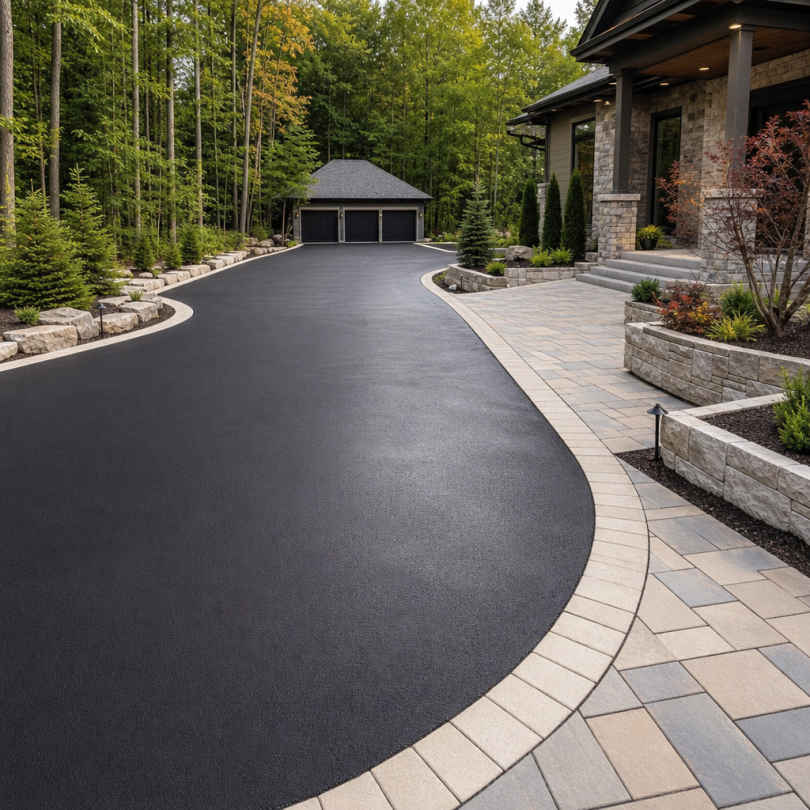

When homeowners think about reducing outdoor maintenance, they often focus on landscaping choices — drought-tolerant plants, artificial turf, or gravel beds. But the surfaces beneath your feet matter just as much. Driveways, walkways, patios, and parking areas are among the most heavily used parts of any property, and their condition directly affects both curb appeal and long-term upkeep costs. The good news is that modern asphalt coatings and thoughtful hardscaping design can work in tandem to create an outdoor environment that looks great and demands very little from you over time.
The Hidden Cost of Neglected Pavement
Most property owners underestimate how quickly unprotected asphalt deteriorates. Ultraviolet radiation breaks down the binder in asphalt, causing it to become brittle and prone to cracking. Water infiltrates those cracks, expands during freeze-thaw cycles, and accelerates structural damage. What begins as a hairline crack can become a pothole within a single winter season. The financial consequence is significant — full asphalt replacement costs several times more than routine sealing and maintenance. Treating pavement as a low-priority item is one of the most expensive mistakes a property owner can make.
Why Protective Coatings Are a Smart Investment
Applying a quality sealcoat to asphalt surfaces creates a protective barrier against the elements. This layer resists water penetration, reflects some UV radiation, and restores the deep black appearance that makes pavement look freshly laid. Beyond aesthetics, sealcoating extends the functional lifespan of asphalt by years — sometimes decades — when applied on a consistent maintenance schedule. For commercial properties, this translates to reduced liability from uneven surfaces and a more professional appearance that reflects well on the business. For residential properties, it means a driveway that stays smooth, clean, and structurally sound without constant attention.
Integrating Asphalt Surfaces into a Low-Maintenance Hardscape Design
Hardscaping — the use of non-living elements like stone, concrete, pavers, and asphalt to design outdoor spaces — has become a cornerstone of modern landscape planning. When done well, it dramatically reduces the time and money spent on yard maintenance. Asphalt is one of the most versatile and cost-effective hardscaping materials available, particularly for large surface areas like driveways, parking lots, and service roads. Its flexibility makes it resistant to cracking under heavy loads, and its dark surface absorbs heat, which can help melt ice faster in colder climates.
Designing for Drainage and Longevity
One of the most important considerations in any hardscape project is water management. Poor drainage is the leading cause of premature pavement failure. When designing or renovating an outdoor space, grading the surface to direct water away from structures and toward appropriate drainage points is essential. Asphalt can be installed with permeable options that allow water to pass through the surface and into a gravel base below, reducing runoff and minimizing pooling. Combining well-graded asphalt with complementary hardscape elements — such as stone borders, retaining walls, and channel drains — creates a system that handles weather events gracefully and requires minimal intervention. For homeowners interested in how high-end hardscaping creates a low-maintenance backyard, integrating sealed asphalt surfaces into the overall design is a practical and visually cohesive choice.
The Environmental Case for Reflective and Protective Coatings
Beyond individual property benefits, asphalt coatings are gaining attention for their broader environmental impact. Dark pavement surfaces absorb solar radiation and contribute to the urban heat island effect — a phenomenon where developed areas experience significantly higher temperatures than surrounding rural zones. This increases energy consumption for cooling and can affect local air quality. Reflective and cool-pavement coatings have emerged as a practical solution to this problem. According to research highlighted by Forbes on how reflective coatings are cooling down Los Angeles neighborhoods, applying light-colored or reflective coatings to asphalt surfaces can meaningfully reduce surface temperatures and contribute to cooler, more livable urban environments. This makes protective coatings not just a maintenance tool, but a genuine contribution to community sustainability.
Choosing the Right Coating for Your Climate and Surface Type
Not all coatings are created equal, and selecting the right product for your specific conditions matters. Coal tar emulsion sealers offer excellent resistance to fuel and chemical spills, making them popular for commercial parking lots and gas stations. Asphalt-based emulsion sealers are more environmentally friendly and work well for residential driveways. Acrylic coatings provide superior UV resistance and are available in a range of colors, including lighter shades that contribute to heat reduction. The condition of the existing pavement, the local climate, and the expected traffic load all factor into which product will deliver the best results. A professional assessment before application ensures that the surface is properly prepared — cleaned, crack-filled, and primed — so the coating adheres correctly and performs as expected.
Professional Expertise Makes the Difference
There is a meaningful difference between a DIY sealcoating job and one performed by an experienced contractor. Surface preparation is the most critical step, and it is also the most commonly skipped by homeowners attempting the work themselves. Without thorough cleaning, crack repair, and edge trimming, even a high-quality sealer will peel, bubble, or fail prematurely. Professional contractors also apply coatings at the correct thickness and under appropriate weather conditions — temperature and humidity both affect how well a sealer cures. The result is a uniform, durable finish that lasts significantly longer than a rushed or improperly applied coat.
About Asphalt Coatings Company
When it comes to protecting and preserving paved surfaces, working with a trusted specialist is essential. Asphalt Coatings Company brings professional-grade expertise to residential and commercial pavement projects, offering sealcoating, crack filling, and surface restoration services designed to extend the life of asphalt and keep properties looking their best. Their team understands that every surface is different, and they approach each project with the attention to detail that quality results require.
Building a Property That Works for You
The most successful outdoor spaces are those that have been designed with long-term performance in mind. Combining durable hardscape materials, smart drainage solutions, and professionally applied protective coatings creates a property that requires less reactive maintenance and more predictable, scheduled upkeep. This approach saves money over time, reduces stress, and keeps the property looking polished year-round. Whether you are managing a commercial facility or improving your home’s exterior, investing in quality pavement protection is one of the highest-return decisions you can make.
Conclusion
Asphalt coatings and hardscaping are not separate concerns — they are complementary strategies that, when combined thoughtfully, produce outdoor environments that are both beautiful and built to last. From reducing urban heat to preventing costly pavement failures, the case for protective coatings is compelling on every level. By partnering with experienced professionals and treating pavement maintenance as a proactive investment rather than a reactive expense, property owners can enjoy surfaces that perform reliably for decades with minimal effort.