
The FIFA World Cup is widely regarded as the most prestigious and widely watched sporting event on the planet. Organized by the Fédération Internationale de Football Association (FIFA), it brings together national football teams from across the globe to compete for the ultimate prize in international football. Since its first edition in 1930, the tournament has grown into a cultural phenomenon that unites billions of fans, transcending borders, languages, and cultures. Every four years, the world comes to a standstill as nations battle for glory, pride, and history on the biggest stage in sports.
More than just a football competition, the FIFA World Cup represents passion, unity, and the spirit of competition. It is a tournament where legends are born, underdogs rise, and unforgettable moments are created that remain etched in global memory forever.
History of the FIFA World Cup
The journey of the FIFA World Cup began in 1930 when the first tournament was held in Uruguay. Only 13 teams participated, and Uruguay emerged as the first-ever champion. The idea was initiated by FIFA to create a global football competition similar to the Olympic Games but dedicated entirely to football.
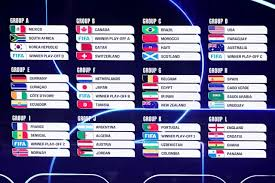
Over the decades, the tournament expanded significantly. More nations joined, and the format evolved to accommodate increasing global interest. Today, the World Cup features 32 teams (and will expand to 48 teams in upcoming editions), reflecting the sport’s growing global reach.
Some of the most historic moments in football history have taken place in World Cup tournaments, including Brazil’s dominance, Germany’s tactical excellence, and Argentina’s legendary performances led by icons like Diego Maradona and Lionel Messi.
Structure of the Tournament
The FIFA World Cup is divided into two main stages:
1. Qualification Stage
Before the main tournament begins, teams from different continents compete in qualification rounds organized by their respective confederations:
- UEFA (Europe)
- CONMEBOL (South America)
- CONCACAF (North & Central America)
- CAF (Africa)
- AFC (Asia)
- OFC (Oceania)
Only the best-performing teams from these qualifiers earn a spot in the final tournament.
2. Final Tournament
The final tournament consists of:
- Group Stage: Teams are divided into groups and play round-robin matches.
- Knockout Stage: Top teams advance to elimination rounds including Round of 16, Quarterfinals, Semifinals, and the Final.
The winner of the final match is crowned the FIFA World Cup Champion.
Legendary Teams and Players
The FIFA World Cup has produced some of the greatest football legends in history.
Brazil
Brazil is the most successful team in World Cup history, winning the trophy five times. Known for their attacking style and creativity, Brazil has produced legends like Pelé, Ronaldo, Ronaldinho, and Neymar.
Germany
Germany is known for its discipline, tactical strength, and consistency. They have won the World Cup four times and are always considered strong contenders.
Argentina
Argentina has also made a strong mark on World Cup history. With players like Diego Maradona and Lionel Messi, they have delivered unforgettable performances, including winning the tournament in 1986 and 2022.
France
France has emerged as a modern football powerhouse, winning titles in 1998 and 2018 with a mix of youth talent and tactical brilliance.
Iconic World Cup Moments
The FIFA World Cup has delivered countless unforgettable moments, such as:
- Diego Maradona’s “Hand of God” goal in 1986
- Brazil’s 1970 team considered one of the greatest ever
- Zidane’s performance in the 1998 final
- Germany’s shocking 7–1 victory over Brazil in 2014
- Lionel Messi lifting the trophy in 2022
These moments have shaped football history and continue to inspire future generations.
Impact of the FIFA World Cup
The FIFA World Cup is more than just a sporting event. Its impact extends far beyond football:
Economic Impact
Host countries experience massive economic growth due to tourism, infrastructure development, and global investments.
Cultural Impact
The tournament promotes cultural exchange and global unity. Fans from different backgrounds come together to celebrate the love of football.
Technological Impact
Modern World Cups use advanced technologies like VAR (Video Assistant Referee), goal-line technology, and data analytics to improve fairness and performance.
Social Impact
The World Cup inspires millions of young players worldwide to pursue football professionally.
Evolution of the Tournament
Over time, the FIFA World Cup has evolved significantly:
- 1930s–1950s: Early development phase with limited participation
- 1960s–1980s: Rise of global popularity and television coverage
- 1990s–2000s: Commercialization and expansion of teams
- 2010s–Present: Technological advancement and global digital engagement
With the introduction of more teams and improved broadcasting, the World Cup continues to reach a wider global audience than ever before.
Upcoming FIFA World Cup Trends
The future of the FIFA World Cup looks even more exciting:
- Expansion to 48 teams increases global participation
- More advanced VAR and AI-based officiating
- Greater focus on sustainability and eco-friendly stadiums
- Digital fan engagement through virtual reality and streaming platforms
The tournament continues to adapt to modern trends while preserving its traditional spirit.
FAQs
1. What is the FIFA World Cup?
The FIFA World Cup is an international football tournament organized by FIFA where national teams compete for the world championship title every four years.
2. Which country has won the most World Cups?
Brazil has won the most FIFA World Cup titles, with a total of five championships.
3. How often is the FIFA World Cup held?
The tournament is held every four years.
4. How many teams participate in the World Cup?
Currently, 32 teams participate, but it will expand to 48 teams in future editions.
5. Who won the last FIFA World Cup?
Argentina won the 2022 FIFA World Cup after defeating France in a dramatic final.
6. What makes the FIFA World Cup so special?
It brings together the best football teams in the world, creating moments of unity, passion, and unforgettable sporting history.
Conclusion
The FIFA World Cup stands as the pinnacle of international football and one of the greatest sporting events in human history. It is not just about winning matches; it is about national pride, global unity, and the celebration of football as a universal language. From its humble beginnings in 1930 to becoming a billion-dollar global spectacle, the World Cup has evolved into a symbol of excellence and passion.
Every four years, the world witnesses stories of triumph, heartbreak, and inspiration. Players become legends, teams become history-makers, and fans become part of something much larger than themselves. Whether it is a last-minute goal, a dramatic penalty shootout, or an underdog victory, the FIFA World Cup continues to deliver moments that define generations.
As the tournament moves into the future with expanded teams and advanced technology, one thing remains unchanged—the magic of the FIFA World Cup will continue to unite the world through the beautiful game of football.