
You treat your home for pests, things settle down, and for a while it feels like the problem is finally under control. Then, without warning, the activity returns. The same scratching in the ceiling, the same telltale signs in the corners, sometimes worse than before. This pattern is remarkably common in terrace-style homes, particularly across older inner-city suburbs. Many residents turn to a pest control Surry Hills service expecting a complete fix, only to find the issue keeps creeping back. The reason is often not inside your home alone. It’s above it. Roof voids that connect multiple terraces allow pests to move freely between properties, creating a problem that simply cannot be solved in isolation.
Why Terrace Homes Are More Vulnerable to Pest Movement
Terrace homes are structurally different from detached houses. They are built in continuous rows, often sharing walls, ceilings, and roofing systems. This close construction reduces the separation between properties and creates hidden pathways that pests can exploit.
Unlike modern builds that are more compartmentalised, older terraces have gaps, ageing materials, and shared structural elements. These features make it far easier for pests to move around unnoticed. Shared walls alone act as corridors, but when combined with connected roof spaces, the movement becomes far more extensive.
The result is that a pest problem rarely belongs to just one property. What appears to be a localised issue may actually be part of a larger, connected infestation running along the entire row.
How Roof Voids Become Hidden Pest Pathways
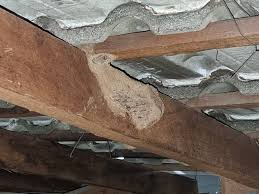
A roof void is the space between the ceiling and the roof structure. In terrace homes, this cavity is often continuous across multiple properties, especially in older constructions where separation barriers are minimal or incomplete.
These spaces are ideal for pests. They are dark, quiet, and protected from disturbance. They also offer warmth in winter and cooler conditions in summer, making them suitable for nesting year-round. Small gaps around tiles, vents, or eaves allow pests to enter easily, and once inside, they can travel across adjoining roof cavities without ever appearing in the visible areas of each home. Rats, mice, and even some insects use these pathways to spread between properties, gradually expanding the infestation.
Because these voids are rarely sealed completely, they effectively function as hidden highways running just above the ceiling.
Why This Problem Often Goes Unnoticed
One of the biggest challenges with roof void pest activity is that it remains out of sight. Most homeowners focus on visible areas such as kitchens, floors, and skirting boards, assuming that if those spaces are clear, the problem must be gone.
Roof voids, however, are not easily accessible. Many properties have limited or no direct access, and inspections are often skipped unless there is an obvious reason. Even when inspections are carried out, identifying entry points and movement pathways can be tricky.
There is also a common assumption that treating one property is enough. If pests appear in one home, the solution is applied there alone. But when the source lies in a shared roof space, the infestation continues to circulate between neighbouring properties. This disconnect between visible treatment and hidden activity is precisely why the issue persists.
The Impact of Cross-Property Infestations
When pests travel through connected roof voids, the effects are ongoing and difficult to control. The most common outcome is reinfestation. Even after treatment, pests can re-enter from an adjacent property through the shared roof space, creating a frustrating cycle where the problem appears resolved temporarily but returns again and again. Overall pest pressure also rises, as multiple properties continue to contribute to the infestation.
Rodents are a clear example. They nest in roof spaces, chew through insulation and wiring, and contaminate areas with droppings and urine. Because they can travel between terraces, eliminating them from one home does little to reduce the broader population.
Insects such as cockroaches and ants can also spread through these pathways, particularly when drawn by food sources or moisture in neighbouring properties. The key issue is that the infestation becomes shared, even if the responsibility doesn’t always feel that way.
Why Targeted Inspection and Coordinated Action Matters
Addressing this type of pest problem requires a different approach. Treating visible areas alone is not enough. The focus needs to shift to the roof void and the connections between properties.
Roof void inspections are essential. They identify entry points, nesting areas, and travel pathways that are simply not visible from inside the home. Checking vents, eaves, and rooflines helps reveal how pests are entering and moving through the structure. Where a more comprehensive assessment is needed, professional building and pest inspections can identify hidden structural issues, pest activity, and conditions that allow infestations to spread between connected properties.
Equally important is coordination between neighbouring residents. When multiple homes share the same roof space, treating one property in isolation will rarely solve the issue. A combined approach reduces the likelihood of pests simply shifting next door and returning later.
Long-term management may involve sealing entry points, improving ventilation screening, and reducing the conditions that attract pests in the first place. Monitoring activity over time ensures the problem is controlled at its source rather than repeatedly addressed at the surface. This approach focuses on understanding how pests move, not just where they appear.
Conclusion
Pest problems in terrace homes are rarely confined to a single property. The shared structure, particularly roof void connectivity, allows pests to travel freely between homes without ever being seen.
This is why infestations often return even after treatment. The issue isn’t always inside the room or even inside the home. It’s above it, tucked away in spaces that are rarely inspected. Recognising this pattern is the first step. A thorough inspection paired with a coordinated approach across properties is what ultimately breaks the cycle and prevents the problem from returning.
FAQs
Why do pests move between terrace houses?
Because shared walls and connected roof spaces allow them to travel without exposure.
What is a roof void and why is it important?
It is the space between the ceiling and the roof where pests often nest and move undetected.
Can treating one property stop the infestation?
Usually not, as pests can re-enter from neighbouring properties through shared structures.
How can roof voids be inspected safely?
Through professional inspections using proper access points such as manholes, with appropriate safety checks in place.
What pests commonly use roof spaces?
Rodents, cockroaches, ants, and sometimes birds or possums.
Is coordinated pest control necessary in terrace homes?
Yes, coordinated treatment across properties is often required for long-term control.